-1.jpg?width=300&name=shared%20image%20(9)-1.jpg)
We spoke with Manca Krumpačnik from Črna na Koroškem, a nominee for Engineer of the Year, about developing recycled materials, introducing new technology at Plastika Skaza, and why technical professions have long since stopped being a male domain.
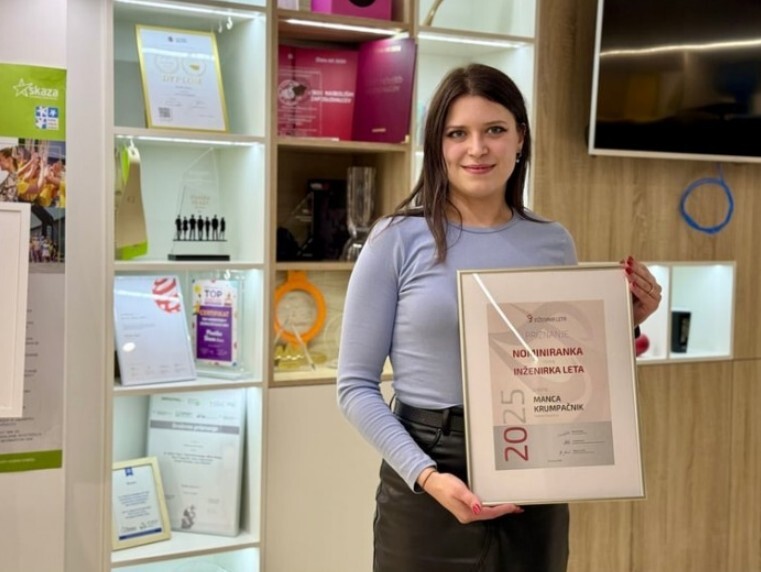
Moving between the production line and the office, where new solutions are born - this engineer from Črna na Koroškem sees plastic differently: as a raw material with a new opportunity. At Plastika Skaza, Manca Krumpačnik works on the development of recycled compounds and the introduction of modern extrusion technology, bridging research, production, and sustainability goals. Her nomination for Engineer of the Year is recognition of her work, and also confirmation that technical professions have not belonged exclusively to men for a long time.
We met at Plastika Skaza, where you work. What exactly were you working on today?
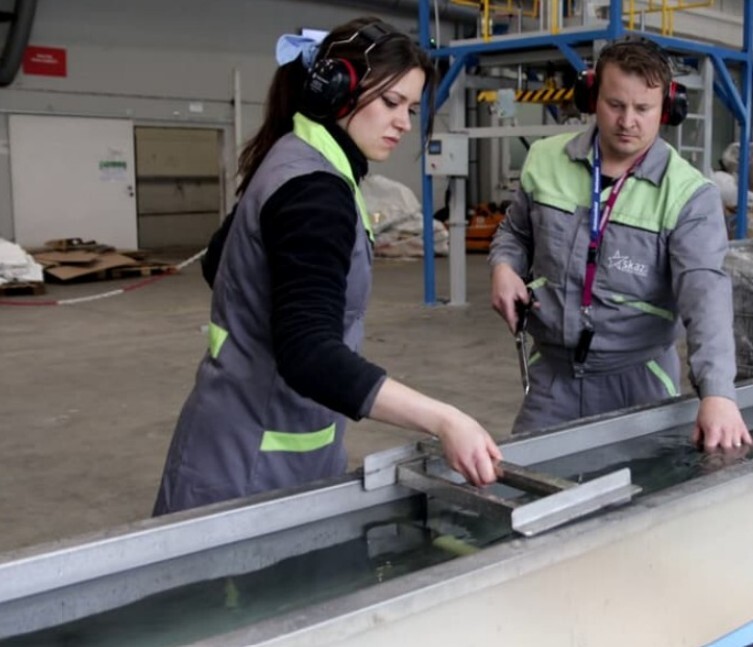
“I started the day by checking and replying to emails, and then I received a few additional tasks. I looked into certain matters and sorted them out. Of course, there was also the morning coffee for the whole office, so we could all start the day a bit more easily. In the morning, I like to tackle smaller tasks because you can finish them quickly—you get that satisfaction of completing something and a good momentum for the rest of the day. I entered some materials into our system. I spent a lot of time researching additives to improve materials or reduce degradation during recycling. I looked into where we can source them and in what quantities they should be dosed. In the meantime, I also prepared a presentation for our internal training session, which we hold every month: individual departments present what they do, and this time it’s my turn to present the area of compounding and material development. After lunch, I went to production, where we prepared the machine and materials for tomorrow, when I’ll actually be working on the line. From time to time I also work as an operator, mainly during tests or process trials, so we prepared the material and the equipment, and then I did a bit more preparation for our conversation.”
How would you describe your job in general? What do you do, what are your responsibilities? Is there such a thing as a typical workday?
“My work is very dynamic and varied, which I really like. Every day is a little different, so there isn’t really a typical day. Sometimes I should set priorities even better, and my manager helps me with that—guiding me on what matters most at a given moment and what our goals are. Some days I’m in the office, some days in production, and sometimes I attend trainings or trade fairs. I’m involved in two projects where we have regular meetings online or in person. Last year I was in Helsinki and Milan, and this year Brussels is coming up. I also work a lot with the Faculty of Polymer Technology, where I graduated—they help us with materials testing. Together we look for solutions whenever challenges or issues come up in production—why something happened, how to fix it, what else to test, and how to improve the process.”
The bridge to your job was the Faculty in Slovenj Gradec you mentioned. How did you decide to study there?
“At first I thought I was more oriented toward the social sciences, but today I realize it was mainly curiosity. I’ve always been interested in finding meaning and purpose in things. Before, I was more interested in people—their challenges and how something can be improved through persistence. Now I’m similarly interested in the challenges of materials: plastics, recycling, waste, and especially how we can bring these materials back into new products. I also chose to study there because I wanted to stay in the Koroška region, and at the same time the programme seemed promising. The Faculty of Polymer Technology is unique in this field and offers good employment opportunities. I personally had no difficulties finding a job, and I believe demand for this knowledge will remain.”
Are stereotypes about “women’s” and “men’s” jobs still present in society? Do people still react with surprise when you tell them what you do?
“Stereotypes are still present, but there are fewer and fewer. People still raise an eyebrow, but I actually like that. Many still find it unusual when I say what I do, but things are improving. More and more girls are enrolling in technical fields—and there are more and more women in these professions as well. In a predominantly male team, I don’t feel any less heard or respected. I feel we are equal; sometimes colleagues are even a bit more attentive and forgiving if I make a mistake. I’ve also noticed that the knowledge you bring as a woman into such a team is often especially valued—sometimes it seems they’re even more impressed by it than they might otherwise be.”
Why do you enjoy going to work every morning? What makes you happy, what inspires you?
“I enjoy going to work because I genuinely like my job: it’s varied, something is always happening, and it requires thinking and exploring. Almost every day I learn something new, which motivates me and gives me a sense of progress. I also like that I have a lot of freedom in my work—that I’m not constantly under pressure—and that I have good working conditions that I know how to appreciate. All of that gives me extra energy and the feeling that I’m doing something that fulfils me.”
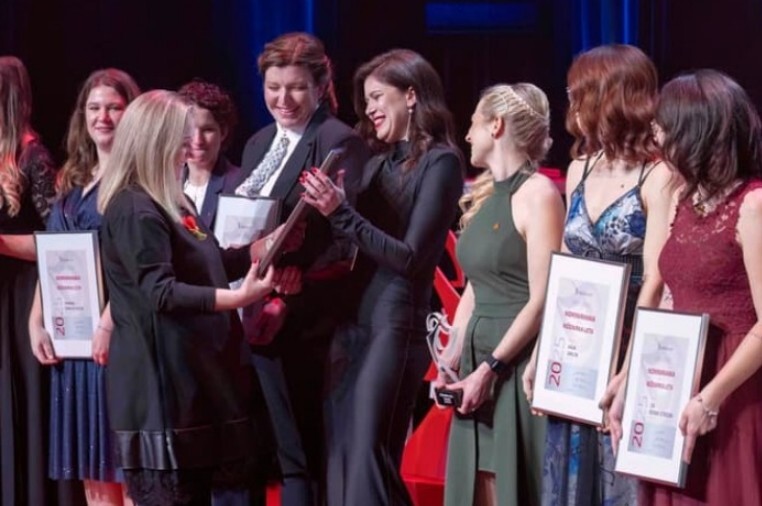
You were recently nominated for Engineer of the Year. How did you experience that recognition?
“The nomination means a lot to me. For me it’s confirmation that I’m on the right path, and at the same time additional motivation and drive. I see it as a reward for my effort and a nice encouragement for future challenges.”
Why is it important that such awards exist in Slovenia?
“Because they show young people—especially girls—how diverse women can be and how broad the opportunities in technology are. They help break the stereotype that working in technology is only heavy and dirty work in production. They show it can be stimulating work where you think a lot, keep learning all the time, and stay curious. And that’s why you really don’t get bored at work.”
So who is a good engineer, really?
“In my opinion, a good engineer—male or female—is above all curious: they want to find answers, experiment, and solve problems. It’s also important to be oriented toward improving things and processes, and to be able to adapt to changes, which are happening faster and faster today.”
At the company where you work, you’re involved in introducing new extrusion technology. What does that mean in practice?
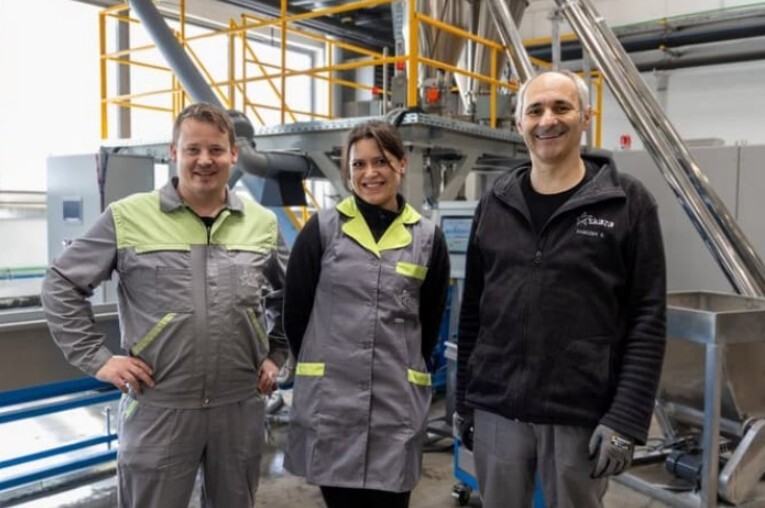
“Extrusion is a process for processing plastics. It’s a continuous process where molten plastic is pressed through a specific shape. With us, the material comes out of the machine in the form of filament, which looks like a kind of spaghetti. It’s then cut and we get granules—so a new material. The machine can also be used for recycling: we add ground production waste or old plastic products, and during the process we can add additives to improve properties. Everything is mixed, and in the end we get a new, usable material that can be reintroduced into production.”
Why are new materials being developed? Where do they go, and who uses them?
“Primarily so we can increase the share of recycled materials in existing products. Some of the materials are used by our customers, and some are also returned into our own products. This reduces the use of fossil resources and increases sustainability. Development is demanding because it involves a lot of testing and validation. You can’t simply offer a material on the market right away—especially with recyclates, it has to be reliable, repeatable, and verified before it ends up in the final product.”
What does the journey of a material look like—from the first idea to the final product?
“First we ask ourselves what the market needs and which need we want to meet. Once the product is defined, material selection follows—the product dictates which properties the material must have. If the product is used outdoors, we need UV/weather resistance; for electrical enclosures, flame retardancy is important and the material must not drip; for a walking board, for example, mechanical strength and impact toughness are crucial because it has to withstand heavy loads. Then comes development: tool design, selection of gating and cooling systems, trial runs, process optimisation, and validations. For materials, additional testing, certificates, safety data sheets, and documentation on substance content are also important—so it’s a truly comprehensive process before the product goes to market.”
What does artificial intelligence mean in your work, and how present is it?
“I use artificial intelligence as a tool for faster access to information and certain data that I used to search for in articles and various sources—now I can get there much faster. But it’s important to use it thoughtfully: you have to know what you’re asking, have a foundation, and be able to verify the answers. You mustn’t use it blindly. As a tool, it’s useful for calculations, finding suppliers, or checking additive shares in a material. It’s good support, but definitely not a substitute for knowledge, experience, and critical thinking.”
-1.jpg?width=2000&height=1500&name=shared%20image%20(9)-1.jpg)
“Today we can’t imagine life without plastic,” said Blaž Nardin, Dean of the Slovenj Gradec faculty, in an interview for Večer. But plastic has a negative connotation. How do those two things fit together?
“Plastic itself isn’t bad. The problem is how it is designed, used, and how we handle it after use. A major challenge is thoughtless packaging—often unnecessarily decorative—as well as high consumption, when we buy more than we need. Another big problem is incorrect waste separation: if plastic isn’t sorted properly, it can’t return to recycling streams. That’s why industry has a key role in developing products thoughtfully and to be recyclable, while consumers are also responsible—through more moderate consumption and proper sorting.”
You work a lot with recycling …
“That’s true. It’s about, in a way, bringing material back to life. In our own brand, products are often made from recyclates or bio-based materials. With external clients, we also strive to design products so they can be recycled, and we agree with customers whether it is acceptable to return recyclate into products. With the new compounding/extrusion line, we can develop higher-quality recyclates and return them to products to a greater extent. We also do a lot for the electrical segment, which is more demanding because materials need high-temperature resistance. But progress is good, and development here is also moving in the right direction.”
What are you most proud of in your career so far?
“I’m most proud that I can participate in introducing a new process in the company and in setting its foundations. I like having insight into the whole picture—from selecting materials and suppliers to tests, parameters, and analyses. I’m involved in testing, where we determine what we will test and which solutions are best, and I also provide technical support to customers. I’m partly involved in the sales side as well, so I’m in contact with customers and suppliers. I also participate in pricing, because many variables from the process influence the final price. It’s precisely this variety and holistic view of the process that I find most interesting about my work.”
What would you advise girls who are considering technical careers but are afraid that “it’s not for them”?
“To girls who have always been drawn to technology and the natural sciences, I would say: don’t doubt yourselves. And to those who aren’t completely sure: don’t be afraid. If mathematics isn’t an insurmountable obstacle, there’s something in technical professions for everyone. Some can move toward more independent work, others toward teamwork or working with customers and suppliers. There are truly many possibilities, so I believe every girl can find an area where she’ll feel good and thrive.”
Author: Nejc Strojnik
Source: Večer, February 19, 2026.